Product Design
AI / UX
Proshort
From Search to Ask AI
A search-to-AI case study: replacing rigid CRM filters with a conversational decision layer that helped users move from finding records to asking business questions, driving a 27% lift in AI adoption.
ROLE
Senior UX Designer
COMPANY
Proshort
TIMELINE
2024 — Present
IMPACT
+27% AI Adoption
01 — SEARCH FAILURE
The Search Paradox
CRM systems were built around search and filters — but users don't think in queries. They think in questions. Despite having powerful search capabilities, users avoided it entirely, relying on manual navigation and fragmented workflows to piece together insights.
"I know the data exists, but I don't know how to get to it quickly."
— Rigid filter-based queries required learning the system's logic, not natural thinking
— Multi-step workflows required navigating across screens for a single business question
— Static outputs (lists, tables) were not designed for actual decision-making workflows
— Search remained critically underutilised despite significant engineering investment
Evidence: persona pain
Sales managers needed answers before pipeline reviews, but search forced them to know object names, filters, and record hierarchy before they could ask a business question.
02 — PARADIGM SHIFT
Search → Intent
Instead of improving search, we reframed the question entirely: what if users could simply ask what they want to know? This meant abandoning the search paradigm and designing a new interaction model from scratch.
TRADITIONAL SEARCH
User adapts to the system
Navigation-driven
Filters and structured queries
Returns raw data lists
Core value: data retrieval
ASK AI
System adapts to user
Intent-driven
Natural language questions
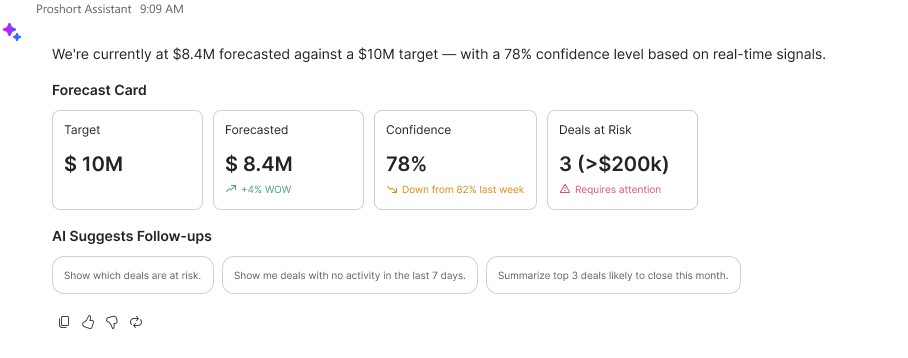
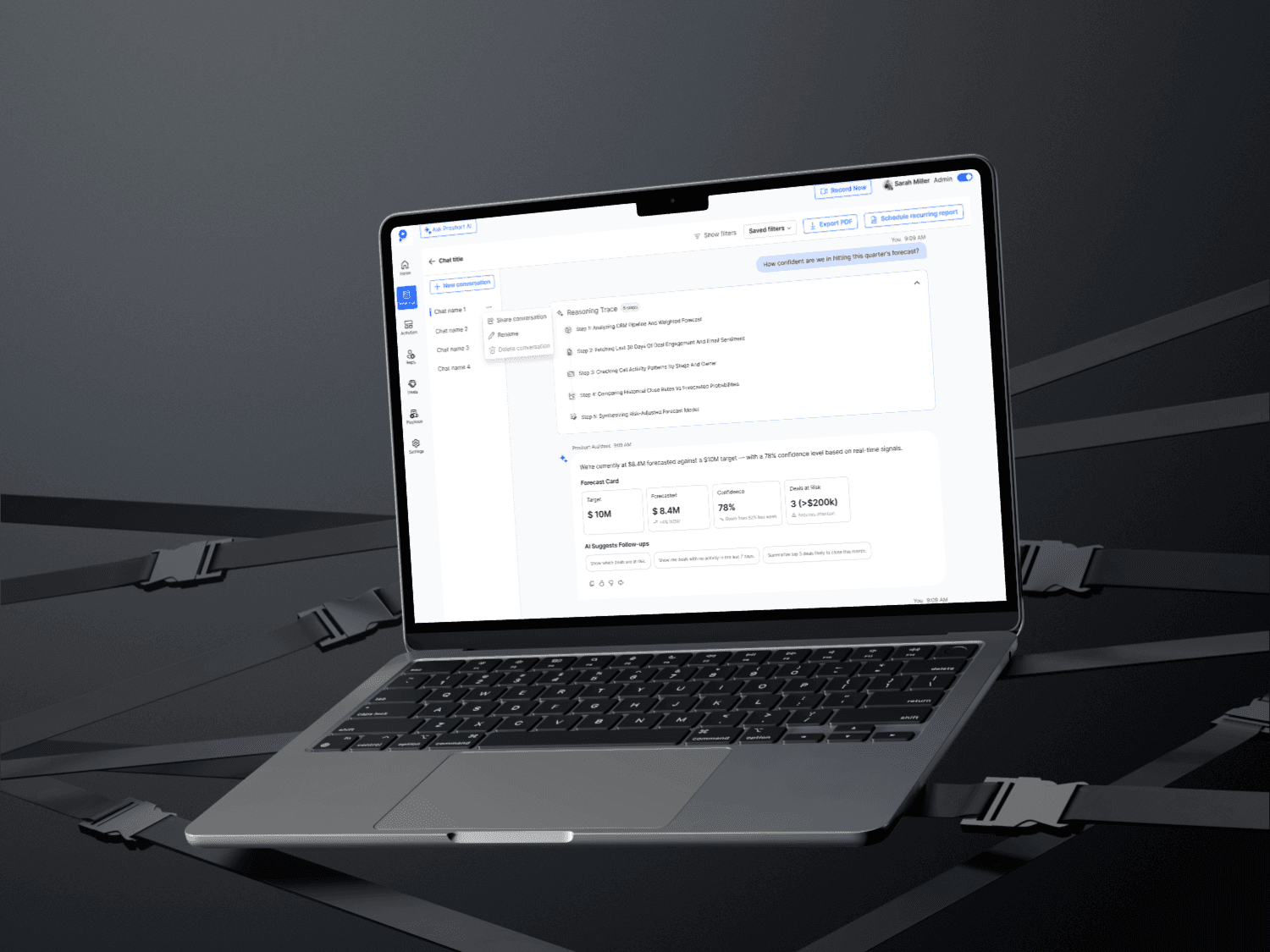
Returns tables + insights + visuals
Core value: decision support
User flow: search to intent
Old: search → filter → scan records → infer answer. New: ask question → AI identifies intent → returns table, insight, and follow-up prompt.
05 — DESIGN TAKEAWAYS
What Changed the Work
01
AI UX is defined entirely by output quality
The interaction model matters far less than what comes back. A perfect chat UI with bad output is worse than a plain input with structured, scannable results.
02
Replacing a paradigm outperforms improving it
Every hour spent improving search filters was wasted. The moment we stopped iterating and started replacing, adoption changed. Knowing when to stop optimising is a senior design skill.
03
Behavioral metrics reveal what surveys hide
Token usage told us the real story. Users said they liked old search in surveys. Their actual behavior — avoiding it — told the opposite. Always instrument for behavior, not opinion.
More Projects
Product Design
AI / UX
Proshort
From Search to Ask AI
A search-to-AI case study: replacing rigid CRM filters with a conversational decision layer that helped users move from finding records to asking business questions, driving a 27% lift in AI adoption.
ROLE
Senior UX Designer
COMPANY
Proshort
TIMELINE
2024 — Present
IMPACT
+27% AI Adoption
01 — SEARCH FAILURE
The Search Paradox
CRM systems were built around search and filters — but users don't think in queries. They think in questions. Despite having powerful search capabilities, users avoided it entirely, relying on manual navigation and fragmented workflows to piece together insights.
"I know the data exists, but I don't know how to get to it quickly."
— Rigid filter-based queries required learning the system's logic, not natural thinking
— Multi-step workflows required navigating across screens for a single business question
— Static outputs (lists, tables) were not designed for actual decision-making workflows
— Search remained critically underutilised despite significant engineering investment
Evidence: persona pain
Sales managers needed answers before pipeline reviews, but search forced them to know object names, filters, and record hierarchy before they could ask a business question.
02 — PARADIGM SHIFT
Search → Intent
Instead of improving search, we reframed the question entirely: what if users could simply ask what they want to know? This meant abandoning the search paradigm and designing a new interaction model from scratch.
TRADITIONAL SEARCH
User adapts to the system
Navigation-driven
Filters and structured queries
Returns raw data lists
Core value: data retrieval
ASK AI
System adapts to user
Intent-driven
Natural language questions
Returns tables + insights + visuals
Core value: decision support
User flow: search to intent
Old: search → filter → scan records → infer answer. New: ask question → AI identifies intent → returns table, insight, and follow-up prompt.
05 — DESIGN TAKEAWAYS
What Changed the Work
01
AI UX is defined entirely by output quality
The interaction model matters far less than what comes back. A perfect chat UI with bad output is worse than a plain input with structured, scannable results.
02
Replacing a paradigm outperforms improving it
Every hour spent improving search filters was wasted. The moment we stopped iterating and started replacing, adoption changed. Knowing when to stop optimising is a senior design skill.
03
Behavioral metrics reveal what surveys hide
Token usage told us the real story. Users said they liked old search in surveys. Their actual behavior — avoiding it — told the opposite. Always instrument for behavior, not opinion.
More Projects
Product Design
AI / UX
Proshort
From Search to Ask AI
A search-to-AI case study: replacing rigid CRM filters with a conversational decision layer that helped users move from finding records to asking business questions, driving a 27% lift in AI adoption.
ROLE
Senior UX Designer
COMPANY
Proshort
TIMELINE
2024 — Present
IMPACT
+27% AI Adoption
01 — SEARCH FAILURE
The Search Paradox
CRM systems were built around search and filters — but users don't think in queries. They think in questions. Despite having powerful search capabilities, users avoided it entirely, relying on manual navigation and fragmented workflows to piece together insights.
"I know the data exists, but I don't know how to get to it quickly."
— Rigid filter-based queries required learning the system's logic, not natural thinking
— Multi-step workflows required navigating across screens for a single business question
— Static outputs (lists, tables) were not designed for actual decision-making workflows
— Search remained critically underutilised despite significant engineering investment
Evidence: persona pain
Sales managers needed answers before pipeline reviews, but search forced them to know object names, filters, and record hierarchy before they could ask a business question.
02 — PARADIGM SHIFT
Search → Intent
Instead of improving search, we reframed the question entirely: what if users could simply ask what they want to know? This meant abandoning the search paradigm and designing a new interaction model from scratch.
TRADITIONAL SEARCH
User adapts to the system
Navigation-driven
Filters and structured queries
Returns raw data lists
Core value: data retrieval
ASK AI
System adapts to user
Intent-driven
Natural language questions
Returns tables + insights + visuals
Core value: decision support
User flow: search to intent
Old: search → filter → scan records → infer answer. New: ask question → AI identifies intent → returns table, insight, and follow-up prompt.
05 — DESIGN TAKEAWAYS
What Changed the Work
01
AI UX is defined entirely by output quality
The interaction model matters far less than what comes back. A perfect chat UI with bad output is worse than a plain input with structured, scannable results.
02
Replacing a paradigm outperforms improving it
Every hour spent improving search filters was wasted. The moment we stopped iterating and started replacing, adoption changed. Knowing when to stop optimising is a senior design skill.
03
Behavioral metrics reveal what surveys hide
Token usage told us the real story. Users said they liked old search in surveys. Their actual behavior — avoiding it — told the opposite. Always instrument for behavior, not opinion.